1666 : Great Fire of London begins
In the early morning hours, the Great Fire of London breaks out in the house of King Charles II's baker on Pudding Lane near London Bridge. It soon spread to Thames Street, where warehouses filled with combustibles and a strong easterly wind transformed the blaze into an inferno. When the Great Fire finally was extinguished on September 6, more than four-fifths of London was destroyed. Miraculously, only 16 people were known to have died.
The Great Fire of London was a disaster waiting to happen. London of 1666 was a city of medieval houses made mostly of oak timber. Some of the poorer houses had walls covered with tar, which kept out the rain but made the structures more vulnerable to fire. Streets were narrow, houses were crowded together, and the firefighting methods of the day consisted of neighborhood bucket brigades armed with pails of water and primitive hand pumps. Citizens were instructed to check their homes for possible dangers, but there were many instances of carelessness.
So it was on the evening of September 1, 1666, when Thomas Farrinor, the king's baker, failed to properly extinguish his oven. He went to bed, and sometime around midnight sparks from the smoldering embers ignited firewood lying beside the oven. Before long, his house was in flames. Farrinor managed to escape with his family and a servant out an upstairs window, but a bakery assistant died in the flames--the first victim.
Sparks from Farrinor's bakery leapt across the street and set fire to straw and fodder in the stables of the Star Inn. From the Inn, the fire spread to Thames Street, where riverfront warehouses were packed full with flammable materials such as tallow for candles, lamp oil, spirits, and coal. These stores lit aflame or exploded, transforming the fire into an uncontrollable blaze. Bucket-bearing locals abandoned their futile efforts at firefighting and rushed home to evacuate their families and save their valuables. Read more about the
Fire of London ....here.
2 Sept 2007


In Search of South Africa....
This is the first entry from this book, as I promised. I will just post very short bits from the book. I hope it inspires more people to get hold of the book and to read it, especially South Africans. It is really a book I treasure and I can't thank Denis enough (from the chess site) for sending me this book! The way he describes places and the people/events that happened at that time and earlier is very informative....the country was still the "Union of South Africa"....we became a Republic in 1961. This book was published the first time in 1948!
In Search of South Africa....by HV Morton--First Published in 1948.
from the "Introduction"
While I was in the Union of South Africa I was constantly reminded of the classical world, in which illusion I was assisted of the air and the architecture of Sir Herbert Baker. It seemed strange to me, as indeed it still does, that a part of the earth which the Greeks and the people of the Hellenistic world would have adored, and the Romans have found so profitable, should have remained concealed from them.
....Flying to South Africa, which sophisticated friends told me would be boring, turned out to be a sheer delight from beginning to end. ........I alighted in a country of haunting beauty and found myself among a people whose kindness and warmth of heart are not anywhere exceeded. As I travelled about the country, I learnt a page of history new to me, and one, I might add, which is not too well known in Europe or America. .....My thanks are due to Mr Winston Churchill for permission to print for the first time the text of the letter he left on his bed the night he escaped from prison in Pretoria in December, 1899. This interesting document has been cherished ever since as a family heirloom, and I am grateful to Mrs O E de Souza of Baberton for showing it to me. In a letter authorising its publication, Mr Churchill says, "You are at liberty to contradict the story of my having swum the Apies River."
Chapter 1
........I knew, of course, that South Africa had grown up in the course of the last fifty years, but the full extend of this growth, whose most spectacular proof is perhaps Johannesburg, was striking and unexpected. Johannesburg, like the word Klondyke, builds up in the mind a picture of gold rush, bars and tin shacks, a picture that was perfectly true fifty years ago. But I stepped out the next morning into a city which seemed to me to bear some resemblance to a small New York, while at the same time retaining something which reminded me of Kingston, Jamaica.
..........When for the first time you found yourself in a crowd of South Africans, your first impression is that these people look, speak, and dress more as we do in Great Brittain than any other folk. And this is true also of those South Africans of Dutch, French, and German descent who have no wish to be like us in any way, for they belong to the same racial stock and cannot help it. Even their language - Afrikaans - has the same roots as English, and gives one the impression that any student of Chaucer should be able to learn to speak it, or at any rate to read it, in a few weeks.
.......to begin a tour of South Africa in Cape Town, and I went there in the Blue Train.......It was a train of great splendour and finer than any train at present running in Europe, and as fine as the best the United States can boast. It was a train of blue sleeping-coaches and restaurant cars, even each compartment, air-conditioned, as I discovered when I found it possible to raise or lower the temperature by moving a little chromium switch above the bed. ...................There came a time when, traversing the Hex River Pass, the train became a snake which twisted back upon itself, so that the locomotive was seen puffing valiantly now wat the left-hand window and now at the right. All round were mighty mountains, each cleft and corrie filled with pale blue shadow, the shadows we know on the west coast of Ireland as "Atlantic blue"; and so we came down into a happy land of peach-blossom and grape-vines, where a stream of ice-clear water ran beside the train for a long time. .........Such was my first impression of Cape Town: a city of dignity and beauty seated at the foot of a blue mountain where two oceans meet, and washed by a magic light that should make of men poets, artists, and philosophers.
-----------to be continued............
In Search of South Africa....by HV Morton--First Published in 1948.
from the "Introduction"
While I was in the Union of South Africa I was constantly reminded of the classical world, in which illusion I was assisted of the air and the architecture of Sir Herbert Baker. It seemed strange to me, as indeed it still does, that a part of the earth which the Greeks and the people of the Hellenistic world would have adored, and the Romans have found so profitable, should have remained concealed from them.
....Flying to South Africa, which sophisticated friends told me would be boring, turned out to be a sheer delight from beginning to end. ........I alighted in a country of haunting beauty and found myself among a people whose kindness and warmth of heart are not anywhere exceeded. As I travelled about the country, I learnt a page of history new to me, and one, I might add, which is not too well known in Europe or America. .....My thanks are due to Mr Winston Churchill for permission to print for the first time the text of the letter he left on his bed the night he escaped from prison in Pretoria in December, 1899. This interesting document has been cherished ever since as a family heirloom, and I am grateful to Mrs O E de Souza of Baberton for showing it to me. In a letter authorising its publication, Mr Churchill says, "You are at liberty to contradict the story of my having swum the Apies River."
Chapter 1
........I knew, of course, that South Africa had grown up in the course of the last fifty years, but the full extend of this growth, whose most spectacular proof is perhaps Johannesburg, was striking and unexpected. Johannesburg, like the word Klondyke, builds up in the mind a picture of gold rush, bars and tin shacks, a picture that was perfectly true fifty years ago. But I stepped out the next morning into a city which seemed to me to bear some resemblance to a small New York, while at the same time retaining something which reminded me of Kingston, Jamaica.
..........When for the first time you found yourself in a crowd of South Africans, your first impression is that these people look, speak, and dress more as we do in Great Brittain than any other folk. And this is true also of those South Africans of Dutch, French, and German descent who have no wish to be like us in any way, for they belong to the same racial stock and cannot help it. Even their language - Afrikaans - has the same roots as English, and gives one the impression that any student of Chaucer should be able to learn to speak it, or at any rate to read it, in a few weeks.
.......to begin a tour of South Africa in Cape Town, and I went there in the Blue Train.......It was a train of great splendour and finer than any train at present running in Europe, and as fine as the best the United States can boast. It was a train of blue sleeping-coaches and restaurant cars, even each compartment, air-conditioned, as I discovered when I found it possible to raise or lower the temperature by moving a little chromium switch above the bed. ...................There came a time when, traversing the Hex River Pass, the train became a snake which twisted back upon itself, so that the locomotive was seen puffing valiantly now wat the left-hand window and now at the right. All round were mighty mountains, each cleft and corrie filled with pale blue shadow, the shadows we know on the west coast of Ireland as "Atlantic blue"; and so we came down into a happy land of peach-blossom and grape-vines, where a stream of ice-clear water ran beside the train for a long time. .........Such was my first impression of Cape Town: a city of dignity and beauty seated at the foot of a blue mountain where two oceans meet, and washed by a magic light that should make of men poets, artists, and philosophers.
-----------to be continued............
Kruger National Park and safari lodges
Click here to access a site with the lodges mentioned in the video....And book your holiday! now!!
Enya....Only Time

Listen to Enya here....
(there is an advert of about 30 seconds...first before the music starts...)
Enya is an Irish artist...read more hereabout her.
(there is an advert of about 30 seconds...first before the music starts...)
Enya is an Irish artist...read more hereabout her.
Durban

I can imagine what lovely weather you people in South Africa have now...Spring and all the lovely time on the sunny golden beaches!


Napoleon and chess
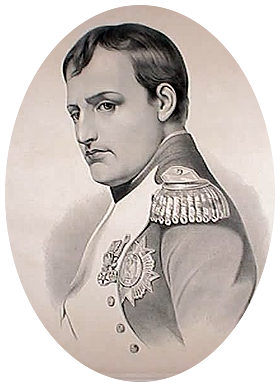 View Napoleon's games here.
 Quote....
The work of a chess player is similar to a blast furnace process: it is continuous and demands a heated passion for chess.
--- Alexander Suetin
Bobby Fischer
 Click on this link.... Chess Tactics.....looks great... try it out...
 Chess games of Bobby Fischer.....Click here. He is THE greatest chess champion of all times!
Listen to Bobby himself herewhen he was interviewed in Aug. 2004.
And here in Iceland where he now is ---as we all know....
Cry my beloved country!
 picture...Houtbay
I got this link from Steve's blog and what can one say....."Cry my beloved country"....that is what you can say.....CRY!My own family back home had some "experiences" too, recently....so sad...it is on my blog...they were "lucky", but other people are less lucky....
Leone's Art
Leone and Pieter live in Aberystwyth and we met them here in London. Leone is a fantastic artist and some of her work can be seen in Embassies in some countries. I took two pictures, bear in mind that I'm not a professional photographer! but I think it is still good enough to admire and to share. The first two pictures are the two which I photographed and I found the others by a search on Yahoo....
We visited them in Wales and you can follow
this link (and go down with the slider) to look at the pictures in Aber and read more about our visit there.


We visited them in Wales and you can follow
this link (and go down with the slider) to look at the pictures in Aber and read more about our visit there.


1 Sept 2007
All in the mind
 "It is your mind that creates this world"....
"Nobody today is normal, everybody is a little bit crazy or unbalanced, people's minds are running all the time. Their perceptions of the world are partial, incomplete. They are eaten alive by their egos. They think they see, but they are mistaken; all they do is project their madness, their world, upon the world. There is no clarity, no wisdom in that!"- Taisen Deshimaru
 Cleaning...cleaning.....all morning! Why is it that you always want every single corner to be cleaned out if friends are visiting.....wonder if everybody is like that! Not just cleaned out, but almost bleached out!! Not even played one single move in one chess game! This is sad....but the good news is...we have friends tonight for a BBQ....so..."dit spyt my..." as the picture says in Dutch (tspijt me)..."sorry"....no chess tonight too! That is SO not me! Also, I'm reading this very interesting book about South Africa....one English chess player sent it to me...Denis...(thank you Denis!!)that book was written in the 1960's....SO good!! The title of the book...."In search of South Africa..." I will post tomorrow about this book.....I'm now only on page 59...I think...but love every word of it...
Spring!
The first day of Spring in South Africa!! And this is how I remember Pretoria!! The Jacaranda trees almost fully in bloom! When it's October, I will just admire these pictures and picture it in my mind!
 On this picture you can see the City Hall of Pretoria.
 Telcom Tower in Groenkloof
 The city also called the Jacaranda City.
 This picture shows the view from the city from the Union Buildings, you can see the gardens of the Union Buildings. The "black" building is the Reserve Bank and the tallest building to the right of it is Absa-bank.


These last two pictures are from the Union Buildings, it was made of sandstone and was designed by Sir Herbert Baker and in November 1910 the cornerstone was laid.
Click here to see what the weatheris like in Pretoria.


Subscribe to:
Posts (Atom)