By Daily Mail Reporter
Last updated at 10:21 PM on 03rd January 2010
Children who are smacked by parents often turn out more successful than those who have not, research has found.
The study concluded that children who had been physically disciplined when they were young, between the ages of 2 and 6, were performing better as teenagers on almost every measure that was taken into consideration than those who had never been smacked.
It was only in cases where it continued beyond the age of 12 that the children were found to be affected negatively, resulting in a dip on performance indicators.
The results of the US-based study undermines the efforts of various campaigners who have been trying to have physical punishment outlawed in the UK, who have claimed that it causes long-term damage to the children.
Currently, UK law allows parents to chastise their children as long as it does not leave a physical mark such as a bruise - the government has said it is reluctant to criminalise parents purely for disciplining their children with the best of intentions.
'The claims made for not spanking children failed to hold up. They are not consistent with the data,' Marjorie Gunnoe, professor of psychology at Calvin College in Grand Rapids, Michigan, told the Sunday Times.
'I think of spanking as a dangerous tool, but there are times when there is a job big enough for a dangerous tool - you just don't use it for all your jobs,' she added.
Gunnoe, who lead the research, said 2,600 people were reviewed, of whom about a quarter had never been smacked.
It also included detailed interviews of about 179 teenagers who were asked how old they were when they were last smacked and how often they were smacked as a child.
She then looked at many outcomes parents generally night want for their teenage children such as academic rank, volunteer work, college aspirations, hope for the future, and confidence in their ability to earn a living when they grow up.
It emerged that those who had been spanked just when they were young were doing a little better as teenagers than those who’d never been spanked on almost every measure.
Research of this kind is rare, given that physical punishment was not viewed as taboo until fairly recently.
However, in a recent poll, more than 70% of Britons would support a ban on smacking.
Source HERE
The above article was slightly adjusted when I read through it again, so here in green, I've copied the adjusted article from the original source - again.
Last updated at 8:55 AM on 04th January 2010
Young children who are smacked by their parents grow up to be happier and more successful than those who have never been hit, research claims.It found that children who are smacked before the age of six perform better at school when they are teenagers.They are also more likely to do voluntary work and to want to go to university than those who have never been physically disciplined.
But the study also revealed that children who are smacked after the age of six were more likely to exhibit behavioural problems, such as being involved in fights. Smacking is currently banned in 20 European countries, including Germany, Spain and the Netherlands. In Britain 'reasonable chastisement' in the home is allowed unless it leaves a mark.
But the study, by Marjorie Gunnoe, professor of Psychology at Calvin College in the U.S. state of Michigan, found there was not enough evidence to prove that smacking harmed most children. She said: 'The claims that are made for not spanking children fail to hold up. 'I think of spanking as a dangerous-tool, but then there are times when there is a job big enough for a dangerous tool. You don't use it for all your jobs.'
Professor Gunnoe questioned 2,600 people about being smacked, of whom a quarter had never been physically chastised. The participants' answers then were compared with their behaviour, such as academic success, optimism about the future, antisocial behaviour, violence and bouts of depression.
Teenagers in the survey who had been smacked only between the ages of two and six performed best on all the positive measures. Those who had been smacked between seven and 11 fared worse on negative behaviour but were more likely to be academically successful. Teenagers who were still smacked fared worst on all counts. Parenting guru Penelope Leach disagreed with the findings.
'No good can come from hitting a child,' she said. 'I do not buy this idea that children will learn positive behaviour from being smacked. 'The law says adults hitting adults is wrong and children should be protected in the same way. Children are people too.' But psychologist Aric Sigman said: 'The idea smacking and violence are on a continuum is a bizarre and fetished view of what punishment is for most parents.
'If it's done judiciously by a parent who is normally affectionate and sensitive to their child, our society should not be up in arms about that. Parents should be taught to distinguish this from a punch in the face.'
Two years ago, Britain was criticised by the UN for failing to ban smacking in the home, after experts said it was a form of abuse.
And growing numbers of the public seem to agree: A recent poll found 71 per cent of parents would support a ban on smacking.
Showing posts with label education. Show all posts
Showing posts with label education. Show all posts
3 Jan 2010


Under-sevens 'too young to learn to read'
The Guardian
Children should not start formal learning until they are seven, according to a world expert in nursery education who will suggest today that teaching reading and writing earlier can put them off for life.
Teaching children at five to read and write can dent their interest in books later on, according to Lilian Katz, a professor of education at Illinois University, who will today address an international conference on nursery schooling at Oxford University.
"It can be seriously damaging for children who see themselves as inept at reading too early," she told the Guardian. Boys were particularly vulnerable when rushed into reading too soon, she said.
Her comments come amid mounting concern over reading skills. In England, a quarter of all 14-year-olds now fail to reach the expected standards, and boys are struggling even more. Earlier this month a Cambridge University report strongly criticised Labour's £500m national literacy strategy for having a "relatively small impact". It concluded that children's reading skills had not improved in 50 years.
Moves in England to introduce more structured learning for three- and four-year-olds could store up problems in the long term, Katz suggests.
English schools start formal teaching at five but there are plans to introduce a foundation stage for three- and four-year-olds which will set new learning goals, including one which specifies that by the time children start school at five they should be able to at least "use their phonic knowledge to write simple regular words". Katz, a former president of the National Association for the Education of Young Children and a respected authority on early years education, said: "Teaching younger children can look OK in the short term but in the long term children who are taught early are not better off. For a lot of children five will be too early.
"That has a more negative impact for boys. For most boys they are growing up in cultures where they are expected to be assertive and active. In instruction they are passive and receptive and reactive, and in the long term that accounts for the negative effects. In most cultures girls tend to put up with instruction earlier and better."
The conference will examine the case for starting formal teaching at a later age. In Sweden children do not start formal instruction until six or seven. Professor Ingrid Pramling-Samuelsson, from the University of Goteborg, who is president-elect of the World Organisation of Preschool Education, will tell the conference that academics in Sweden have been "surprised" to hear that England is moving towards earlier formal instruction.
The children's minister Beverley Hughes will also address the conference about the early years foundation stage, which has been interpreted by some as the extension of the national curriculum to toddlers. The government is adamant that despite setting goals for children to reach they are not targets and it is not a formal curriculum.
A spokeswoman for the Department for Children, Schools and Families said: "The formal school starting age of five has served children well for decades and standards in our primary schools have never been higher. The curriculum is age-appropriate and we actively support teachers to adapt their teaching to the needs of children. We want all children to make progress in literacy and numeracy at an early age, as these skills are critical to their ability to get the most out of learning later on."
Source HERE
Children should not start formal learning until they are seven, according to a world expert in nursery education who will suggest today that teaching reading and writing earlier can put them off for life.
Teaching children at five to read and write can dent their interest in books later on, according to Lilian Katz, a professor of education at Illinois University, who will today address an international conference on nursery schooling at Oxford University.
"It can be seriously damaging for children who see themselves as inept at reading too early," she told the Guardian. Boys were particularly vulnerable when rushed into reading too soon, she said.
Her comments come amid mounting concern over reading skills. In England, a quarter of all 14-year-olds now fail to reach the expected standards, and boys are struggling even more. Earlier this month a Cambridge University report strongly criticised Labour's £500m national literacy strategy for having a "relatively small impact". It concluded that children's reading skills had not improved in 50 years.
Moves in England to introduce more structured learning for three- and four-year-olds could store up problems in the long term, Katz suggests.
English schools start formal teaching at five but there are plans to introduce a foundation stage for three- and four-year-olds which will set new learning goals, including one which specifies that by the time children start school at five they should be able to at least "use their phonic knowledge to write simple regular words". Katz, a former president of the National Association for the Education of Young Children and a respected authority on early years education, said: "Teaching younger children can look OK in the short term but in the long term children who are taught early are not better off. For a lot of children five will be too early.
"That has a more negative impact for boys. For most boys they are growing up in cultures where they are expected to be assertive and active. In instruction they are passive and receptive and reactive, and in the long term that accounts for the negative effects. In most cultures girls tend to put up with instruction earlier and better."
The conference will examine the case for starting formal teaching at a later age. In Sweden children do not start formal instruction until six or seven. Professor Ingrid Pramling-Samuelsson, from the University of Goteborg, who is president-elect of the World Organisation of Preschool Education, will tell the conference that academics in Sweden have been "surprised" to hear that England is moving towards earlier formal instruction.
The children's minister Beverley Hughes will also address the conference about the early years foundation stage, which has been interpreted by some as the extension of the national curriculum to toddlers. The government is adamant that despite setting goals for children to reach they are not targets and it is not a formal curriculum.
A spokeswoman for the Department for Children, Schools and Families said: "The formal school starting age of five has served children well for decades and standards in our primary schools have never been higher. The curriculum is age-appropriate and we actively support teachers to adapt their teaching to the needs of children. We want all children to make progress in literacy and numeracy at an early age, as these skills are critical to their ability to get the most out of learning later on."
Source HERE
27 Sept 2007
WHAT!!??


Click on images to read...
By reading this article, I first thought, when I saw the link..."oh no, must be in South Africa"....and then....following the link....goodness gracious!!! America!!!!! THE country....of all that think they are well clear of "racism"...wow!!
Read here the article of the first one further...
Second article can be found here.....
26 Sept 2007

21 Sept 2007
Peer Gynt
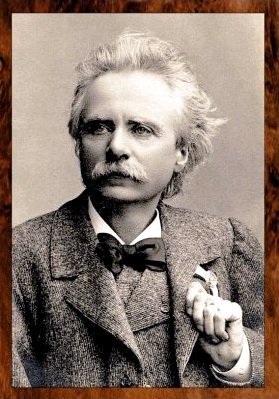
Chris from My kop op 'n blok inspired me to write about Peer Gynt. I read his post about Peer Gynt and that took me back to my secondary school when I was 14. Our music teacher discussed the story about the music/play of Peer Gynt, composed by Edvard Grieg. I loved it, and "Anitra's dance" and "In the Hall of the Mountain King" were my favourite bits.
Last year, I taught a mixed Y5/Y6 class and I played them the animation on BBC 's Radio 3's website. The music you hear on Radio 3's site is "In the Hall of the Mountain King!" Have some "messy fun" on their site!!
We listened to the music first, they drew a storyboard, which they thought would suit the music best. Then I showed them the animation and they then drew a second storyboard with the real story in a sequence... they loved this animation which is quite good...have a look! I myself found it enjoyable! I was really impressed when I found it on the web!
Edvard Grieg (1843-1907) is the greatest composer Norway has fostered. In retrospect one may wonder how a country with neither national freedom nor a long tradition of art music could have produced a man of such genius. Up to 1814 Norway had been totally subject to Denmark, with Copenhagen as its cultural center. From 1814 to 1905 it was forced into a union with Sweden. The first half of the eighteenth century was a time of poverty in Norway and it was some time before it could assert itself among its Scandinavian brothers.
We listened to the music first, they drew a storyboard, which they thought would suit the music best. Then I showed them the animation and they then drew a second storyboard with the real story in a sequence... they loved this animation which is quite good...have a look! I myself found it enjoyable! I was really impressed when I found it on the web!
Edvard Grieg (1843-1907) is the greatest composer Norway has fostered. In retrospect one may wonder how a country with neither national freedom nor a long tradition of art music could have produced a man of such genius. Up to 1814 Norway had been totally subject to Denmark, with Copenhagen as its cultural center. From 1814 to 1905 it was forced into a union with Sweden. The first half of the eighteenth century was a time of poverty in Norway and it was some time before it could assert itself among its Scandinavian brothers.
Peer Gynt is a play by the Norwegian playwright Henrik Ibsen. It was written in 1867, and first performed in Christiania (now Oslo) on 24 February 1876, with incidental music by the composer Edvard Grieg. Ibsen wrote Peer Gynt while traveling in Rome, on Ischia and in Sorrento. It was first published on November 14, 1867, in Copenhagen. The first edition comprised 1,250 copies. It was followed by a re-print of 2,000 copies after 14 days.
Read HEREabout the play, Peer Gynt.
Whoops!! Just found this on Youtube!! Listen to "In the hall of the Mountain King!"
And.........here is "Anitra's dance!"
20 Sept 2007
My good deed

 Gorgeous frogs!
 "Two Frogs" is a fantastic book. I want to share this book today and by doing this, do my "good deed" for today! I love books, even more, children's books! I'm slowly busy building up a library! I used this book with great success during Philosophy lessons...oh yes, BiB, if you read here...take notice! Firstly, the pictures in this book...just look how stunning! Doesn't it convey allot, only by looking at it! That's why children's books fascinate me, you get outstanding illustrations and lifelong messages. This book is definitely one of those which you would buy and have different uses for, when teaching. I'm going to copy a few lines from the book...
"Once there were two frogs sitting on a lily pad in the middle of a large pond. One of the frogs was holding a stick. "What's that for?" asked the other frog. "For protection," said the frog with the stick. "This stick is to beat off the dog."
"What dog?" said the other frog, quickly looking over his shoulder. "I can't see a dog. There is no dog!" "Not now there isn't, not at this moment," replied the frog with the stick. "But what if a dog should come swimming across the pond and try to eat us up? Better be safe than sorry." The other frog was puzzled. "But no dogs ever come swimming in the pond," he protested. "At least I've never seen one. In fact I can't even remember seeing one on the edge of the pond. And why would a dog want to come swimming in the pond anyway? They're not so fond of swimming as us frogs, you know."
Now, by looking at the pics, you can imagine what happened...I put questions forward to 9 year old children e.g. Should we always be prepared? Should we always think about all the "what ifs"? Is it ridiculous thinking the worst might happen? Why would you want to be prepared for the worst? What do you need to be well prepared? What do you see as "the worst"? How else can we prepare us for the "worst"? This book lends itself to numerous questions and at least an hour's discussion with children. One of the "what ifs" in this book really happened at the end! That was the dog...but the frogs were already gone and not there to see the dog...
If you want to leave your point of view about these questions, it would be well received!
A Japanese story about Two frogs..do enjoy!
7 Sept 2007
I wonder....
 This is the Lasker painting...and I'm trying to find more information about it!
I do wonder what happened to this school!
This article was written in 2004!
Checkmate in sight for chess villagers
By Michael Leidig and Oscar Kornyei in Stroebeck,
Germany
April 9, 2004
A German village with a 1000-year-old tradition of playing chess is fighting to save its unique school from closure by education chiefs.
Students at the Dr Emanuel Lasker High School in Stroebeck, 80 kilometres south-west of Magdeburg in eastern Germany, are taught chess compulsorily in recognition of the village's long and unusual association with the world's oldest game.
However, villagers have now been told that their school - named after the Prussian Jew from Brandenburg province who was world chess champion for 27 years from 1894 - is too small to stay open, prompting fears that their chess tradition is in jeopardy.
According to local custom, the inhabitants of Stroebeck first learned to play chess in 1011 when bishop Arnulf II of Halberstadt ordered a Wendish duke, Guncellin, to be locked up in the village watchtower.
With nothing to read and little in common with his peasant guards, the duke carved 32 chess pieces and painted a board on a table, then taught the guards how to play.
The current mayor of Stroebeck, Rudi Krosch, said: "At that time there would have been little social contact between nobility and the peasant classes, and the villagers were fascinated by the game. The guards taught it to the other villagers and they just never stopped playing."
All Stroebeck's 1200 residents have been able to play chess since it was put on the curriculum of the first village school, founded 200 years ago. Teachers say that the game improves concentration and logical thinking among pupils, who sit regular chess exams, as well as keeping the village tradition alive.
Chess is played with enthusiasm by students in the playground and in after-school clubs. Classrooms are full of children hunched over boards, their moves timed by clocks, and pupils regularly dress up as chess pieces to take part in "live" games. First-year pupils play as pawns, and advance to larger pieces as their own game improves.
The tradition is threatened because of a decision by Sachsen-Anhalt's regional government to close schools with too few pupils. The regional education minister, Jan-Hendrik Olbertz, said chess was not on the state curriculum. "There are a number of other schools in the vicinity of Stroebeck," he said.
Susanne Heizmann, of the school's parents' council, said: "Chess survived here despite the almost complete destruction of the village in the Thirty Years War, and other disasters like the Black Death. The education ministry is trying to do what centuries of plague, war and famine failed to do, and that is destroy our traditions."
The Telegraph, London
Article comes from HERE for reading.
This article was written in 2004!
Checkmate in sight for chess villagers
By Michael Leidig and Oscar Kornyei in Stroebeck,
Germany
April 9, 2004
A German village with a 1000-year-old tradition of playing chess is fighting to save its unique school from closure by education chiefs.
Students at the Dr Emanuel Lasker High School in Stroebeck, 80 kilometres south-west of Magdeburg in eastern Germany, are taught chess compulsorily in recognition of the village's long and unusual association with the world's oldest game.
However, villagers have now been told that their school - named after the Prussian Jew from Brandenburg province who was world chess champion for 27 years from 1894 - is too small to stay open, prompting fears that their chess tradition is in jeopardy.
According to local custom, the inhabitants of Stroebeck first learned to play chess in 1011 when bishop Arnulf II of Halberstadt ordered a Wendish duke, Guncellin, to be locked up in the village watchtower.
With nothing to read and little in common with his peasant guards, the duke carved 32 chess pieces and painted a board on a table, then taught the guards how to play.
The current mayor of Stroebeck, Rudi Krosch, said: "At that time there would have been little social contact between nobility and the peasant classes, and the villagers were fascinated by the game. The guards taught it to the other villagers and they just never stopped playing."
All Stroebeck's 1200 residents have been able to play chess since it was put on the curriculum of the first village school, founded 200 years ago. Teachers say that the game improves concentration and logical thinking among pupils, who sit regular chess exams, as well as keeping the village tradition alive.
Chess is played with enthusiasm by students in the playground and in after-school clubs. Classrooms are full of children hunched over boards, their moves timed by clocks, and pupils regularly dress up as chess pieces to take part in "live" games. First-year pupils play as pawns, and advance to larger pieces as their own game improves.
The tradition is threatened because of a decision by Sachsen-Anhalt's regional government to close schools with too few pupils. The regional education minister, Jan-Hendrik Olbertz, said chess was not on the state curriculum. "There are a number of other schools in the vicinity of Stroebeck," he said.
Susanne Heizmann, of the school's parents' council, said: "Chess survived here despite the almost complete destruction of the village in the Thirty Years War, and other disasters like the Black Death. The education ministry is trying to do what centuries of plague, war and famine failed to do, and that is destroy our traditions."
The Telegraph, London
Article comes from HERE for reading.
6 Sept 2007
DUH!!!

WE KNOW (click on link here)THIS for AGES!!!!Wake up Britain!!! You are a FIRST WORLD COUNTRY!!!!!!!!
The evidence has always been cleared!! Read THISon Yahoo....
As a teacher...I've always asked parents NOT to give their children these sweets, crisps, fizzy drinks and other rubbish....when I know their children are a bit hyper....this is really NO NEW news to any teacher...!! (well, hopefully not new news to all teachers...worth being one!...yes, one teacher --- Assitant Head's daughter...!! admitted the one day that she doesn't know about Hubble and what it is!!...that's why I say..."worth being one"..)....and it shouldn't be "news" to parents too....only to the people who found it out just now...after the "clear" evidence...!! We know it for ages, how can they say it is only now from "clear" evidence...!! The "evidence" was clear for the last 10 years or more!! Can more parents come and shout it out loudly!! and support the teachers in this difficult task to get parents NOT to buy all those rubbish for their children if we ASK them not to!!!!

One morning, a little boy stood in the line, having a chocolate while lining up!! One of the "hyper" boys.... His mum was there...standing with other parents...I asked her politely to take the chocolate...I mean, it was 5 to 9 in the morning!! How can a child have chocolates that time of day...before going into school!! His mum went to him (Peter...name changed)...and said..."Peter, your teacher says you can't have this chocolate...give it to me please..).... I mean!!! Put the blame on the teacher for taking away the chocolate....she's not willing to take it upon her and say..."Peter, you can't have the chocolate, you know it is not good for you..."...no!! Too easy to say..."your teacher says..." !! Please, oh please...save the nation with parents like that!!
28 Aug 2007
Bosfontein Primary School
 This is the school which my grandpa started. The original school is actually about 2 km down on this road (and my mum only told me that afterwards!!) What I knew, was that he started the school in his house! I will have to go back next time to the original place then! It was really my first time visiting this place, always wanted to. On the 2nd picture is the original 2 classes before they extended the school. He taught in this school too. What is still on the video camera, is the new classes in the back. There are about 5 or more new classes.
The word "bosfontein" --- if you break it up...means..."bos"..in English.."bush" and "fontein"..."fountain"....


26 Aug 2007
Learning disabilities
I want to save this link to come back to it later!
Best book if you're a teacher in a Primary School.
Readhere more about learning disabilitiesand the different types.
Best book if you're a teacher in a Primary School.
Readhere more about learning disabilitiesand the different types.
Willow Pattern

Do you know the story of the Willow Pattern? If not....or...if you've forgotton the story....listen to it here...Willow Pattern story and you can visit Amazon here
to order yourself a copy. It is a fantastic book!

to order yourself a copy. It is a fantastic book!

22 Aug 2007

Chess in a South African school as subject
Wow! I hope they are still having it! Well done! Hennopspark is a school in Centurion, just outside Pretoria.


21 Aug 2007
School
 This is Annette, Head of Department of the Junior Phase. She's a very caring person, will stretch herself to lengths to have something to eat for everybody for any reason! Always busy organising food-stuff for any simple occasion! Here, I caught her red handed with the scones! I arrived a bit earlier than I said....she's teaching grade 3's and I used to be her colleague teaching the other grade 3-class.
 The staff room.....notice board .....and on the next photo, the table with cups ready...playtime is in a minute or two if the table looks like this! Always so neatly and tidy.....as I'm used to it.
 And on this pic....Annette's grade 3's! They were busy writing a poem and were so quiet, concentrating on their work!
 Children's work on display....and some still thinking what they want to write....


16 Jul 2007
Stressed out!
I think we are all a bit stressed out at school! hahaha...it is a typical sign of end-of-year...so much going on...actually ...too much...i think i'm getting fed-up, because i can't do in my class what i really want to do...and that is to have a bit of FUN!
Our PPA for the afternoon was cancelled...and i couldn't have the fun in the afternoon which i planned, because the leavers' practise took place later...so we were kind of waiting to be called....and nobody called at the time they were supposed to call us....only much later...what a waste...but...we didn't mind really, because we finished off our memory booklets.
Tomorrow another busy day, we have to practise our presentation for Wednesday in the Tower! And i plan an ICT project, to use PAINT.NET and to create our own pictures in the style of Hockney.... today's Seurat was a total lost with the "waiting.." What a shame, so much good time going lost... but anyway...there is always something else that needs to be done...and i think i'm still in a red mood!

This is a view in the Drakensberg Mountains in South Africa! Beautiful!!

And...I'm in a purple mood too! That is close enough to red...lol!
This is a street in Pretoria! In Spring,,,,,,October, the city is covered in Jacaranda blossoms.....that is the time when students write exams...and fall in love!
Pretoria is also called the "Jacaranda city"... because of all the Jacaranda trees in the streets...really a beautiful scene during October/November.
And I have now a new mouse, it seems to me that the other one was the cause of all my problems on the chess site!

Hmmm...i like these purple colours...my favourite colour!

And Red,...another favourite colour...
Our PPA for the afternoon was cancelled...and i couldn't have the fun in the afternoon which i planned, because the leavers' practise took place later...so we were kind of waiting to be called....and nobody called at the time they were supposed to call us....only much later...what a waste...but...we didn't mind really, because we finished off our memory booklets.
Tomorrow another busy day, we have to practise our presentation for Wednesday in the Tower! And i plan an ICT project, to use PAINT.NET and to create our own pictures in the style of Hockney.... today's Seurat was a total lost with the "waiting.." What a shame, so much good time going lost... but anyway...there is always something else that needs to be done...and i think i'm still in a red mood!


This is a view in the Drakensberg Mountains in South Africa! Beautiful!!

And...I'm in a purple mood too! That is close enough to red...lol!
This is a street in Pretoria! In Spring,,,,,,October, the city is covered in Jacaranda blossoms.....that is the time when students write exams...and fall in love!
Pretoria is also called the "Jacaranda city"... because of all the Jacaranda trees in the streets...really a beautiful scene during October/November.
And I have now a new mouse, it seems to me that the other one was the cause of all my problems on the chess site!

Hmmm...i like these purple colours...my favourite colour!

And Red,...another favourite colour...
15 Jul 2007
Schools
Interesting reading....follow the link at the bottom read more...
The Schools Secretary, Ed Balls, last week announced a raft of proposals for the country's beleaguered schools.The spin was classic New Labour: for teachers, "greater flexibility" in the classroom; for parents, more focus on the basics; for the country, sickened by targets from the cradle to the grave, "no more clutter". And for New Labour's "fix" of excitement and modernity, there are to be new subjects (such as personal finance and Urdu) and a pledge to make teaching more "relevant".The Balls hype began almost a week ago and the formal announcement finally followed, of a new national curriculum. The curriculum quango's head repeated the promise of greater "flexibility".But his message, like that of his political boss, was mixed: there will be fresh demands on what is taught and how - whether it is "the Battle of the Nile or taking out a mortgage" - and there will be more dumbing down.New Labour's nationalisation of the classroom is moving into overdrive. Not only will the heads have to cram new subjects into the tightest of timetables, but their teachers will have to change the old ones.History and geography look set to be politicised to fit in with the Brownite spin and the ideologies of the Left: in geography, there will be an emphasis on world "poverty", climate change and cultural diversity; in history, we'll have the slave trade and the history of Islam as well as the "cultural, social and ethnic diversity" of Britain.The teachers, too, are in for more "assessment", the favoured ideological alternative to written exams for all. The profession may be drowning in paperwork but there will be more. The new plans emphasise "personalised learning" and with it "personalised assessment".And, as if life were not already bad enough for heads and teachers, they will also have to take on board the controversial "diploma" system, with phoney subjects dreamed up by educationalists......
http://wakeupopenyoureyes.blogspot.com/
The Schools Secretary, Ed Balls, last week announced a raft of proposals for the country's beleaguered schools.The spin was classic New Labour: for teachers, "greater flexibility" in the classroom; for parents, more focus on the basics; for the country, sickened by targets from the cradle to the grave, "no more clutter". And for New Labour's "fix" of excitement and modernity, there are to be new subjects (such as personal finance and Urdu) and a pledge to make teaching more "relevant".The Balls hype began almost a week ago and the formal announcement finally followed, of a new national curriculum. The curriculum quango's head repeated the promise of greater "flexibility".But his message, like that of his political boss, was mixed: there will be fresh demands on what is taught and how - whether it is "the Battle of the Nile or taking out a mortgage" - and there will be more dumbing down.New Labour's nationalisation of the classroom is moving into overdrive. Not only will the heads have to cram new subjects into the tightest of timetables, but their teachers will have to change the old ones.History and geography look set to be politicised to fit in with the Brownite spin and the ideologies of the Left: in geography, there will be an emphasis on world "poverty", climate change and cultural diversity; in history, we'll have the slave trade and the history of Islam as well as the "cultural, social and ethnic diversity" of Britain.The teachers, too, are in for more "assessment", the favoured ideological alternative to written exams for all. The profession may be drowning in paperwork but there will be more. The new plans emphasise "personalised learning" and with it "personalised assessment".And, as if life were not already bad enough for heads and teachers, they will also have to take on board the controversial "diploma" system, with phoney subjects dreamed up by educationalists......
http://wakeupopenyoureyes.blogspot.com/
14 Jul 2007
Pandora's box

This is one of my favourite stories. Two years consecutively, my children performed this story during our class assembly. They love it...and the message is very clear!
Read here more too...
Pointillism: Seurat
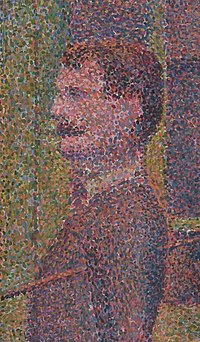
I would like my children to do a final piece of art and that will be in the style of Seurat! Read more about pointillism here:
10 Jul 2007
SATS Results
We got our SATS results! Well, must say we are very proud and the Headteacher is over the moon. Our children did great and we feel good!
My class did some "recycling" all morning.....we used plastic bags to make pom poms to go on to a sculpture for the Thames Festival in middle September. That was fun. Tomorrow we have again our BRASS project in the afternoon. David is coming in to support the groups in their presentation which they have to prepare for Brad...the Director of the HMS Belfast...for Thursday! And Thursday Brad will be handing them their certificates too.
In the meantime, we try to get our heads around the leavers' evening. Practise time is so little. Y6 children are going to pretend that they are in a care centre and they are going to use their memories from "primary" to act out bits. Y5's are going to pretend that they are visiting the care centre and they will be singing songs to the "people" (Y6) in the care centre. We are using this book (see picture) as an idea for our "play"....

Subscribe to:
Posts (Atom)