17 May 2013

Theme song - Beautiful!


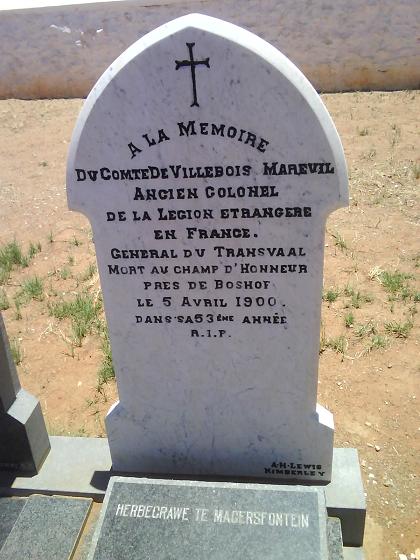
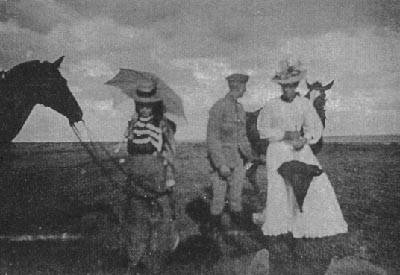
Take a Dutchman, the kind of Dutchman that fought against all the might of Spain, intermix him with the inflexible French high notes. Take him through 8 generations of war, put him in a country suitable for  huntsman, marksman and Ryder  Put a finer temper in him, threw the Bible, and you get the Afrikaner Boer [not pronounced boar!] A nation so strong that it took the British Empire 191 000 000 pounds, 3 years and 480 000 soldiers to conquer the 2 poorest smallest states in the world.
31 Mar 2013

The Candidates - London Chess 2013


Photo: Round 12
FIDE Candidates Tournament
Round 1 on 2013/03/15 at 14.00
SNo.NameRtgRes.NameRtgSNo.
1GMAronian Levon2809½ - ½GMCarlsen Magnus28728
2GMGelfand Boris2740½ - ½GMRadjabov Teimour27937
3GMIvanchuk Vassily2757½ - ½GMGrischuk Alexander27646
4GMSvidler Peter2747½ - ½GMKramnik Vladimir28105
Round 2 on 2013/03/16 at 14.00
SNo.NameRtgRes.NameRtgSNo.
8GMCarlsen Magnus2872½ - ½GMKramnik Vladimir28105
6GMGrischuk Alexander2764½ - ½GMSvidler Peter27474
7GMRadjabov Teimour27931 - 0GMIvanchuk Vassily27573
1GMAronian Levon28091 - 0GMGelfand Boris27402
Round 3 on 2013/03/17 at 14.00
SNo.NameRtgRes.NameRtgSNo.
2GMGelfand Boris27400 - 1GMCarlsen Magnus28728
3GMIvanchuk Vassily27570 - 1GMAronian Levon28091
4GMSvidler Peter27471 - 0GMRadjabov Teimour27937
5GMKramnik Vladimir2810½ - ½GMGrischuk Alexander27646
Round 4 on 2013/03/19 at 14.00
SNo.NameRtgRes.NameRtgSNo.
8GMCarlsen Magnus28721 - 0GMGrischuk Alexander27646
7GMRadjabov Teimour2793½ - ½GMKramnik Vladimir28105
1GMAronian Levon2809½ - ½GMSvidler Peter27474
2GMGelfand Boris2740½ - ½GMIvanchuk Vassily27573
Round 5 on 2013/03/20 at 14.00
SNo.NameRtgRes.NameRtgSNo.
3GMIvanchuk Vassily2757½ - ½GMCarlsen Magnus28728
4GMSvidler Peter2747½ - ½GMGelfand Boris27402
5GMKramnik Vladimir2810½ - ½GMAronian Levon28091
6GMGrischuk Alexander2764½ - ½GMRadjabov Teimour27937
Round 6 on 2013/03/21 at 14.00
SNo.NameRtgRes.NameRtgSNo.
4GMSvidler Peter27470 - 1GMCarlsen Magnus28728
5GMKramnik Vladimir2810½ - ½GMIvanchuk Vassily27573
6GMGrischuk Alexander2764½ - ½GMGelfand Boris27402
7GMRadjabov Teimour27930 - 1GMAronian Levon28091
Round 7 on 2013/03/23 at 14.00
SNo.NameRtgRes.NameRtgSNo.
8GMCarlsen Magnus2872½ - ½GMRadjabov Teimour27937
1GMAronian Levon2809½ - ½GMGrischuk Alexander27646
2GMGelfand Boris2740½ - ½GMKramnik Vladimir28105
3GMIvanchuk Vassily2757½ - ½GMSvidler Peter27474
Round 8 on 2013/03/24 at 14.00
SNo.NameRtgRes.NameRtgSNo.
8GMCarlsen Magnus2872½ - ½GMAronian Levon28091
7GMRadjabov Teimour27930 - 1GMGelfand Boris27402
6GMGrischuk Alexander27641 - 0GMIvanchuk Vassily27573
5GMKramnik Vladimir28101 - 0GMSvidler Peter27474
Round 9 on 2013/03/25 at 14.00
SNo.NameRtgRes.NameRtgSNo.
5GMKramnik Vladimir2810½ - ½GMCarlsen Magnus28728
4GMSvidler Peter2747½ - ½GMGrischuk Alexander27646
3GMIvanchuk Vassily27571 - 0GMRadjabov Teimour27937
2GMGelfand Boris27401 - 0GMAronian Levon28091
Round 10 on 2013/03/27 at 14.00
SNo.NameRtgRes.NameRtgSNo.
8GMCarlsen Magnus28721 - 0GMGelfand Boris27402
1GMAronian Levon28091 - 0GMIvanchuk Vassily27573
7GMRadjabov Teimour2793½ - ½GMSvidler Peter27474
6GMGrischuk Alexander27640 - 1GMKramnik Vladimir28105


Round 11 on 2013/03/28 at 14.00
SNo.NameRtgRes.NameRtgSNo.
6GMGrischuk Alexander2764½ - ½GMCarlsen Magnus28728
5GMKramnik Vladimir28101 - 0GMRadjabov Teimour27937
4GMSvidler Peter27471 - 0GMAronian Levon28091
3GMIvanchuk Vassily2757½ - ½GMGelfand Boris27402
Round 12 on 2013/03/29 at 14.00
SNo.NameRtgRes.NameRtgSNo.
8GMCarlsen Magnus28720 - 1GMIvanchuk Vassily27573
2GMGelfand Boris2740½ - ½GMSvidler Peter27474
1GMAronian Levon28090 - 1GMKramnik Vladimir28105
7GMRadjabov Teimour2793½ - ½GMGrischuk Alexander27646
Round 13 on 2013/03/31 at 14.00
SNo.NameRtgRes.NameRtgSNo.
7GMRadjabov Teimour27930 - 1GMCarlsen Magnus28728
6GMGrischuk Alexander2764½ - ½GMAronian Levon28091
5GMKramnik Vladimir2810½ - ½GMGelfand Boris27402
4GMSvidler Peter27471 - 0GMIvanchuk Vassily27573
Round 14 on 2013/04/01 at 14.00

SNo.NameRtgRes.NameRtgSNo.
8GMCarlsen Magnus28720 - 1GMSvidler Peter27474
3GMIvanchuk Vassily27571 - 0GMKramnik Vladimir28105
2GMGelfand Boris2740½ - ½GMGrischuk Alexander27646
1GMAronian Levon28721 - 0GMRadjabov Teimour27937

22 Dec 2012

Kasparov vs Turing


Yesterday, at the Alan Turing Centenary Conference in Manchester, Garry Kasparov won in 16 moves against the original Turing chess program which was created in 1950. The game, which mostly had historical value, was played during Kasparov's speech on Alan Turing and his 'Paper Machine'. It must have been one of the easiest games he ever played. In a mere 16 moves, Garry Kasparov checkmated his opponent, and got a decent applause from the audience in the Manchester Town Hall. But it was not about the game, or the moves. This had nothing to do with "man vs machine", like the famous Kasparov vs Deep Blue matches in 1996 and 1997. This was all about the opponent. It was a showcase of the first chess computer program ever written, for the first time in action in public. Turing wrote the chess program soon after the Second World War and before the computer had even been invented on which to run it. After finishing the algorithm, he had to run the program using pencil and paper and his own brain as the computer. It took Turing 15 to 30 minutes for each move. The game "Turing program vs Kasparov" was played on a laptop with the Chessbase program and the "Turing engine" set to a 2-ply depth. The whole game lasted about two minutes. Read more on the Source-link. Source: http://www.chessvibes.com/reports/garry-kasparov-versus-alan-turings-1950-chess-program

Chess game 22


A chess game played, where I could have made more quality moves, but ended well at the end.

Next game: Another game where I played white [again] and my Knight and Queen checkmated the King.

18 Dec 2012

Fischer vs Spassky

Iceland 1972 - Round 6 Annotations by the 'Earl' of CW. 1.c4 The first surprise. The times that Fischer has started any serious tournament or match game with anything other than 1.e4 can be counted on the fingers of a mutilated hand. A psychological shock for Spassky, who undoubted only prepared for 1.e4. e6 A flexible move which can be used to transpose into any number of openings. 2.Nf3 d5 3.d4 The second shock for Spassky. Fischer plays the Queen's Gambit for the first time in his career. Nf6 4.Nc3 Be7 5.Bg5 O-O 6.e3 h6 (6...Nbd7) is the standard variation of the Orthodox Defence. The text allows Black more options. 7.Bh4 (7.Bxf6) is the Petrosian Variation, which has a drawish reputation (much like Tigran Petrosian himself). 7. ... b6 The Tartakower Variation. It is a good choice for Spassky, as he had never lost a game playing this line. 8.cxd5 Nxd5 The older move, (8...exd5), is quite playable. The text leads leads to a series of exchanges similar to Capablanca's freeing manœuvre in the Orthodox Variation. 9.Bxe7 Qxe7 10.Nxd5 exd5 11.Rc1 Be6 Although the move (11...Bb7) seems natural in this position (and it is also played), the point of the text is not to block the b- or c-file with the Bishop, as Black will eventually want to play ...c5, the standard freeing move in the Queen's Gambit Declined. 12.Qa4 c5 13.Qa3 Rc8 Up to here was all known theory at the time. 14.Bb5! A move first played in the game Furman v. Geller, Moscow 1970. Even though Furman won that game, it had been mostly forgotten, but Fischer remembered it! a6 The next few moves were also played in the Furman-Geller game. Since Furman won that game, it's not clear why Spassky followed it, unless he was unaware of it and came up, on his own, with the same moves as Geller had played. By the way, Geller was one of Spassky's seconds at this match, so it is strange how Fischer's move caught Spassky totally by surprise. 15.dxc5 bxc5 On (15...Rxc5? 16.0-0!) 16.O-O Ra7 Geller, whose losing effort is being duplicated here, suggests (16...Qb7 and if 17.Be2 Nd7), although on (16...Qb7 White might play 17.Ba4), which may be stronger. 17.Be2 Nd7 This allows the following White Knight's move, but if not this then how does Black develop? The Furman v. Geller game continued (17...a5 18.Rc3 (18.Rc2 might be even better) 18...a4 19.Rfc1 Re8 20.Bb5!) and White is clearly better, and in fact went on to win. 18.Nd4! Qf8?! On (18...Nf6 19.Nb3 c4 20.Qxe7 Rxe7 21.Nd4) Black has the inferior endgame, but the text move is even worse. 19.Nxe6 fxe6 20.e4! Strikes at the heart of Black's central Pawn mass. d4 Spassky chooses a dynamic defence, but it weakens his White squares. However, other moves are not much better, e.g. (20...dxe4) leaves all of Black's Pawns weak, or (20...Nf6 21.e5 Ne4 (21...Nd7 22.f4) 22.f3), and on (20...Qf4 21.exd5 exd5 22.Rfd1). 21.f4! Controlling e5 and threatening Bc4 with great effect. Fischer now has the kind of position in which he rarely doesn't win. Qe7 Else Bc4 followed by f5. 22.e5! "Fixing" Black's weak e-pawn. Rb8 Better is (22...Nb6, to prevent Bc4, although in that case 23.Qb3! Nd5 24.f5) and White still has a strong attack. 23.Bc4 Kh8 Now (23...Nb6 is no longer good because of 24.Qb3!), and on (23...Nf8 24.f5) with the threat of f6. 24.Qh3 Perhaps even better would be (24.Rf2, threatening to double Rooks on either the f- or the c-file, as well as being able to meet 24...Rab7 with 25.Rcc2). 24. ... Nf8 No better is (24...Rxb2 25.Bxe6). 25.b3 a5 26.f5! White opens the f-file in order to better attack with his heavy pieces, and he will also obtain a passed e-pawn. exf5 27.Rxf5 Nh7 28.Rcf1 White calls up the reserves. Notice that on (28.Rf7? Ng5). 28. ... Qd8 (28...a4) is a tad better, but Black is basically lost. Only a miracle can save him. 29.Qg3 (29.e6!) would also be good. 29. ... Re7 30.h4 Once again, (30.e6!) at once would be good, but Fischer's position is so strong that he can afford a few inaccuracies. 30. ... Rbb7 31.e6 Finally! Rbc7 If (31...d3 32.Rd5). 32.Qe5 Qe8 33.a4! Creating something close to zugzwang. Qd8 On (33...Kg8 34.Rf7) wins at once, and if (33...Nf6 34.Rxf6! gxf6 35.Rxf6) and Black's King is without shelter. 34.R1f2 Qe8 (34...d3 is met with 35.R5f3 d2 36.Rd3) etc. 35.R2f3 Qd8 Spassky is obviously repeating moves for lack of a plan. 36.Bd3 Qe8 37.Qe4! Threatening 38.Rf8+. Nf6 38.Rxf6! This pseudo-sacrifice of the exchange breaks down the last vestiges of resistance. gxf6 39.Rxf6 Kg8 40.Bc4 Threatening 41.Rf7. Kh8 41.Qf4 Even quicker is (41.Rf7!), but the text is good enough to win, e.g. (41...Kg8 42.Qg3+! Kh8 43.Qe5!) etc. Black resigns and Fischer wins game 6 and takes the lead in the match for the first time, en route to his eventual win of the World Championship match.